Tag: yuri

  • Anime Terms to Know That Every Otaku Uses

    Anime Terms to Know That Every Otaku Uses

    If you’re watching anime or reading manga, you might come across words that are unfamiliar. While the list of anime terms could be almost endless and overwhelming, we’ve cherry-picked 50 core terms every fan should know to get started, covering fan culture, character types, genres, media, and common Japanese phrases.

    Fan Culture Terms

    OTP

    OTP stands for One True Pairing, or, as fans joke, “OH THE PAIN!” Really, it’s the first one, but there’s not much difference between them. Generally, you pick two characters that you like and want them to be together, or “ship” them together. They become your OTP.

    Canon

    Canon is what the author and creator of the show has actually shown or written. Fans like to come up with head-canon all day, but they haven’t been confirmed by the creator. Usually, canon determines whether someone stays alive in a series or if a couple ends up together.

    Weeaboo/Weeaboos

    Weeaboos, known back in the day as Wapanese or “wannabe Japanese,” are anime fans who aren’t just in it for the anime. They’re in it for what they’ve decided is Japanese culture. They wear kimonos incorrectly, call everything “kawaii!” or “sugoi!”, and seem to think that Japanese cuisine consists exclusively of Pocky and ramen. They definitely want to move to Japan because it’s just like real-life anime, right?

    Otaku

    Originally meaning “venerable house” in Japanese, the term now refers to someone who is extremely devoted to a hobby or interest, often anime, manga, or games.

    In Japan, calling someone an otaku can sometimes carry negative connotations, implying obsession or social awkwardness, though it’s not always insulting. Outside Japan, it’s commonly used simply to describe passionate anime or manga fans.

    AMV

    An anime music video (AMV) is typically a fan-made music video consisting of clips from one or more Japanese animated shows set to songs.

    MAD

    Similar to AMVs but originating from Japanese fan culture. MAD videos often use Japanese songs and can include fast-paced editing, parody, or tribute styles.

    Doujinshi

    Dōjinshi is the Japanese term for self-published works, usually manga or novels. They’re often the work of amateurs and can range from original stories to fan-made works featuring existing characters.

    Subs vs Dubs

    The eternal debate in anime fandom. “Subs” refers to watching anime in Japanese with subtitles, while “dubs” means watching with English voice actors. Fans have strong opinions on both sides.

    Character Personality Types (Dere Types)

    The dere family has many members, but we’ll cover the four core types that show up constantly in anime.

    The most common dere types

    Tsundere

    A tsundere is a Japanese term for a character development process that describes a person who is initially cold (and sometimes even hostile) before gradually showing a warmer, friendlier side over time.

    Popular tsundere: Taiga Aisaka (Toradora!), Asuka Langley Soryu (Neon Genesis Evangelion), Chitoge Kirisaki (Nisekoi)

    Yandere

    A yandere is defined as someone who appears sweet and loving on the surface but becomes dangerously obsessive, possessive, and potentially violent when it comes to their love interest.

    Popular yandere: Yuno Gasai (Future Diary), Himiko Toga (My Hero Academia), Kotonoha Katsura (School Days)

    Kuudere

    A kuudere is a character who appears cold, emotionless, and distant on the outside but has a warm, caring side that they rarely show. Unlike tsunderes who are hostile, kuuderes are simply aloof and expressionless.

    Popular kuudere: Rei Ayanami (Neon Genesis Evangelion), Nagato Yuki (The Melancholy of Haruhi Suzumiya), Takashi “Mori” Morinozuka (Ouran High School Host Club)

    Dandere

    A dandere is a quiet, shy character who struggles with social interaction but becomes talkative and sweet around people they’re comfortable with, especially their love interest.

    Popular dandere: Hinata Hyuga (Naruto), Chiyo Sakura (Gekkan Shoujo Nozaki‑kun), Rinko Yamato (Ore Monogatari!!)

    Anime & Manga Genres

    Naruto’s Naruto Uzumaki, textbook shounen lead

    Shōnen

    A genre of Japanese comics and animated films aimed primarily at a young male audience, typically characterized by action-filled plots.

    You’ve probably heard of popular series like Naruto, One Piece, and Dragon Ball.

    Shōjo

    A genre of Japanese comics and animated films aimed primarily at a young female audience, typically characterized by romance and relationship-focused plots.

    You’ll find this in anime like Fruits Basket, Kaichou wa Maid-sama!, and Ouran High School Host Club.

    Seinen

    A genre aimed at adult men, typically featuring more mature themes, complex plots, and realistic violence.

    Well-known examples are One Punch Man and Tokyo Ghoul.

    Josei

    A genre aimed at adult women, featuring realistic romance and slice-of-life stories with mature themes.

    For example, Usagi Drop and Chihayafuru are quintessential josei shows.

    Isekai

    A genre where the protagonist is transported to, reborn, or trapped in a parallel universe or fantasy world. Literally means “different world” in Japanese. Popular examples include Sword Art Online and Re:Zero.

    Slice of Life

    A genre focusing on everyday experiences and mundane aspects of life, often with minimal plot. These shows emphasize character development and atmosphere over action.

    Think K-On!, Barakamon, and Laid-Back Camp for perfect representations of this genre.

    Yaoi

    Yaoi, also known as Boys’ Love (BL), is a narrative featuring a romance or relationship between two or more males, like in Given or Junjou Romantica.

    Yuri

    A narrative or visual work featuring a romance or relationship between two or more females.

    Examples include Citrus and Bloom Into You.

    Ecchi

    Ecchi is an often-used slang term in the Japanese language for playfully sexual actions. As an adjective, it’s used with the meaning of “sexy,” “dirty,” or “naughty.” Ecchi anime contains suggestive content but stops short of explicit scenes.

    Notable examples are High School DxD, Mushoku Tensei, and Prison School.

    Content & Media Types

    OVA

    Short for Original Video Animation. OVAs often contain special extra episodes marketed to fans who may have seen an entire series but are hungry for more. They’re released directly to home video rather than airing on TV.

    ONA

    Short for Original Net Animation. Similar to OVAs but released exclusively online through streaming platforms rather than physical media.

    Special / OVA Special

    Standalone or bonus episodes released outside the regular TV broadcast. These are often holiday episodes, fan-service specials, or extras bundled with Blu-rays or manga volumes.

    Omake

    A Japanese word meaning “extra” or “bonus.” It refers to short bonus scenes, comedic skits, or extra content included at the end of an anime episode, Blu-ray, or DVD.

    Many popular shows like One Piece, My Hero Academia, and Attack on Titan include omake segments for fans.

    Manga

    Japanese comic books that serve as the source material for many anime series. Fans often compare the anime to the manga to see what was changed, cut, or expanded.

    Light Novel (LN)

    A format of short, illustrated novels aimed at young adults. Many popular anime, especially isekai and fantasy series, originate as light novels.

    Famous examples include Sword Art Online, Re:Zero − Starting Life in Another World, The Rising of the Shield Hero, Overlord, and Konosuba, all of which have become staples of modern anime culture.

    Visual Novel (VN)

    A story-driven game focused on reading, player choices, and branching narratives.

    Several well-known anime adaptations come from visual novels, including Steins;Gate, Fate/stay night, Clannad, Danganronpa, and Higurashi When They Cry, each with a strong fanbase and critical acclaim.

    Hentai

    A style of anime and manga that focuses on adult themes, featuring stories and characters intended for viewers over 18 years old.

    Fan Service

    Fan service is material in a work of fiction or in a fictional series that is intentionally added to please the audience. It’s about “servicing” the fan, giving fans “exactly what they want.” This often includes suggestive camera angles, beach episodes, or revealing outfits.

    Some anime known for heavy fan service include High School DxD, Fairy Tail, Free!, and Food Wars, which frequently incorporate these elements to excite their audiences.

    Seiyuu

    Japanese voice actors who bring anime characters to life. Famous seiyuu include Kana Hanazawa (Angel Beats!) and Mamoru Miyano (Death Note).

    Common Japanese Words & Phrases

    Kawaii at its finest: Anya Forger from Spy x Fam

    Kawaii

    An adjective in Japanese meaning “pretty; cute; lovely; charming; dear; darling; pet.” It’s commonly used by anime and manga fans. Horrendously overused by some fans on anything chibi. ANYTHING. Because they feel the need to repeat the three Japanese words they know OVER AND OVER.

    Sugoi

    Japanese equivalent of either “awesome” or “awful.” Most frequently used to mean the former, at least among Westerners.

    Nakama

    A Japanese word meaning “comrade” or “friend,” but in the anime context, it carries a deeper meaning of bonds between companions who fight or struggle together. Made famous by One Piece.

    Baka

    Means “idiot” or “fool.” One of the most commonly used insults in anime, often said by tsundere characters.

    Nani

    Simply means “what?” in Japanese. Often dramatically used in anime memes.

    Arigatou / Arigatou Gozaimasu

    “Thank you.” Arigatou is casual, while arigatou gozaimasu is the polite, formal version.

    Gomenasai / Gomen

    “I’m sorry” or “excuse me.” Gomen is the casual version, while gomenasai is more formal.

    Daijoubu

    Means “it’s okay” or “are you okay?” Used constantly in anime to reassure someone or check if they are hurt.

    Ganbatte / Ganbare

    Means “do your best” or “good luck.” Often shouted during emotional or motivational moments.

    Yatta

    An excited exclamation meaning “I did it!” or “yes!” Used after a win or success.

    Itadakimasu

    A phrase said before eating, roughly meaning “I humbly receive.” You’ll hear this constantly in anime featuring food or meal scenes.

    Senpai

    A senpai is an upperclassman who mentors an underclassman. This term is used most often in English in reference to anime and manga, though it’s used more broadly to mean a respected senior.

    Sensei

    A Japanese word meaning “teacher” or “master.” It’s used to show respect to someone with expertise or authority, and you’ll see it everywhere in school anime, martial arts series, or any story with a mentor figure.

    Kohai

    A junior or underclassman, the counterpart to senpai. Refers to someone with less experience or lower status.

    Onii-chan / Onee-chan

    Affectionate terms for “big brother” and “big sister.” Common in slice-of-life and romance anime to show closeness.

    Character & Design Terms

    The Apothecary Diaries’ Jinshi, a classic bishounen

    Bishie/Bishounen

    Short for bishounen, translated roughly as “pretty boy.” Used for attractive male anime characters, and sometimes for real-life. Generally, they’re sort of girlish-looking with delicate features.

    Jinshi from The Apothecary Diaries and Howl Jenkins Pendragon from Howl’s Moving Castle are classic examples.

    Loli

    Loli refers to Japanese media pertaining to the attraction of young-looking, cute girls that blend slightly erotic characteristics. The term comes from “Lolita complex.”

    Anya Forger from Spy x Family wins hearts with her expressions and antics, and Victorique de Blous from Gosick is another tiny but incredibly clever loli.

    Shota

    The male equivalent of loli, referring to young-looking, cute boys in anime and manga. Derived from “Shotaro complex”, characters like Nishikata from Karakai Jōzu no Takagi-san and Aki Shiina from Sunohara-Sō no Kanrinin-san are good examples.

    Moe

    A term used to describe characters who are cute, endearing, or evoke a protective feeling from the audience.

    For example, the adorable students in K-On! or Lucky Star are considered moe.

    Chibi

    Chibi is a Japanese slang word describing something short (a thing, an animal, or a person). In anime, it refers to cute, small, simplified character designs used for comedic effect.

    For instance, the tiny, exaggerated versions of the characters in Attack on Titan: Junior High are chibi.

    Kemonomimi

    Characters with animal-like features, usually ears or tails, such as catgirls or foxboys.

    Popular examples include Koneko from High School DxD and Holo from Spice and Wolf.


    What did you think? Did you already know some or most of these words? Let us know your favorite words to use as an anime fan!

    As always,

    Keep Smiling!

  • 10 Best Gyaru Romance Anime

    10 Best Gyaru Romance Anime

    Gyaru romance anime have exploded in popularity, bringing stylish, confident girls who break stereotypes and steal hearts. From My Dress-Up Darling’s Marin to More Than a Married Couple’s Akari, these shows prove that gyaru anime isn’t just for girls and can fit almost any genre. If you’re craving more bleached hair, fashionable outfits, and surprisingly wholesome love stories, these 12 gyaru romance anime deliver everything from cosplay culture to marriage practicals and unexpected connections.

    1. My Dress-Up Darling

    My Dress-Up Darling was one of the first to internationally popularize the now-trendy setup of pairing a flashy gyaru with a shy, introverted boy, literally sparking the gyaru romance boom. Consistently scoring around 8/10 on multiple ranking sites, it’s no surprise it landed at the top of our list.

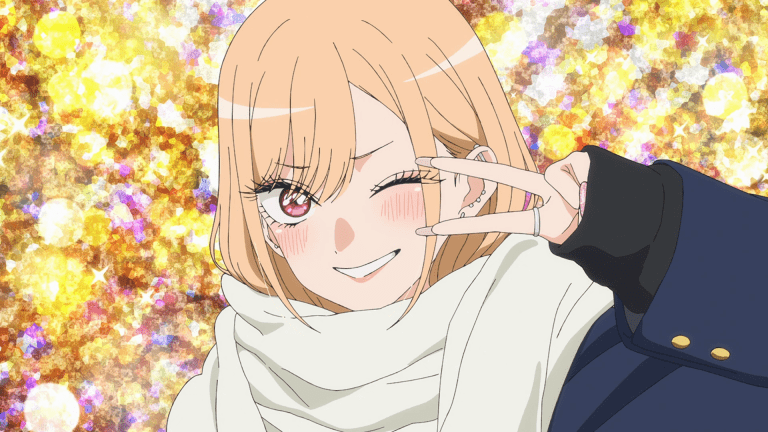
    Marin Kitagawa is an extroverted gyaru passionate about cosplay who draws her shy classmate, Wakana Gojo, a craftsman of traditional dolls and clothing, into the colorful world of cosplay. Her long fingernails and bleached hair are modern gyaru characteristics, while her chic schoolgirl style is reminiscent of kogyaru fashion.

    What makes this anime special is how Marin genuinely respects Gojo’s hobby instead of mocking it, creating a relationship built on mutual appreciation for each other’s passions and crafts that feels refreshingly healthy. Also, a little fun fact: Marin is actually one of the few anime characters who rocks different outfits all the time.

    2. More Than a Married Couple, But Not Lovers

    Adapted by Studio Mother in 2022, More Than a Married Couple, But Not Lovers throws Jiro Yakuin and gyaru Akari Watanabe into a “marriage practical” where students live together as couples to develop social skills.

    Akari initially seems like the stereotypical extroverted gyaru with waist-length pink hair in twin buns, manicured nails, and revealing uniform modifications, but that’s just a facade. Deep down, she’s kind, responsible, and surprisingly inexperienced despite appearances, even claiming Jiro is the first person she’s ever kissed. Both want to switch partners to be with their crushes, but as they “pretend” to be the perfect couple, real feelings develop. Our favorite gyaru holds the idea of true love in high regard and isn’t “easy” despite gyaru stereotypes.

    The series earned 7.6 on IMDb, proving the forced proximity trope works when characters have genuine chemistry beneath the surface tension and comedic misunderstandings.

    3. Days with My Stepsister

    Studio Deen’s 2024 gyaru anime is an underrated slow-burn romance that pairs the classic “step-sibling” setup with a surprisingly grounded emotional core. Yūta’s new stepsister, Saki, is a gyaru, but there’s more to her than flashy looks.

    Romance in Days with My Stepsister is playful and tense, never rushed, so every flirty moment feels earned. Unlike the typical over-the-top romances often seen in similar stories, this anime keeps a calm, grounded tone while still hitting emotionally. The best part is that you can get through it in just a few hours or spread it out over a couple of days, and you’ll come away feeling like you experienced something believable, maybe even too realistic for anime standards.

    4. My First Girlfriend is a Gal

    High schooler Junichi Hashiba laments being a virgin while his friends pressure him into confessing to Yukana Yame, a beautiful gyaru at school. Yukana is a fashionable gal with strawberry blonde hair, green eyes, loose socks, and a carefree attitude who easily determines Junichi just wants to lose his virginity, but agrees to be his girlfriend anyway.

    NAZ produced the 10-episode series that aired from July to September 2017, establishing the classic gyaru-meets-loser-boy dynamic. While initially guarded about lewd stuff and calling it gross, Yukana genuinely likes Junichi, and their relationship develops beyond surface attraction. Her childhood friend Ranko is another tan-skinned gyaru with blonde hair who creates chaos by being possessive of Yukana.

    The series gets criticized for fanservice overload, but watching Junichi mature from lustful teen to a boyfriend who actually values Yukana’s personality shows why gyaru romance works when it focuses on breaking stereotypes instead of reinforcing them.

    5. Hokkaido Gals Are Super Adorable!

    Silver Link and Blade’s Winter 2024 adaptation follows Tokyo teen Tsubasa Shiki moving to Hokkaido’s city of Kitami, where he meets classmate and native gyaru Minami Fuyuki. Minami takes a liking to the city boy and takes him under her wing, with Tsubasa finding her unlike any girl he’s ever met.

    Minami is a Dosanko Gyaru (Hokkaido Gyaru), representing regional gyaru fashion with blonde hair and a carefree attitude despite freezing winters. The manga sold over 300,000 copies by June 2021, proving the appeal of this regional romance. Scoring 6.9 on IMDb, viewers praised how it avoids typical ecchi tropes for genuine slow-burn romance.

    The series works as both a love letter to Hokkaido and a culture clash comedy, with local dialect jokes and brutal winter settings creating obstacles that most gyaru romances completely ignore. Minami’s warm personality hits different when literally everything around them is frozen solid, making her the perfect guide for both Hokkaido and first love.

    6. Super GALS!

    Studio Pierrot’s 52-episode 2001 series is one of the most recognizable pieces of media focused on gyaru lifestyle and culture, predating the modern gyaru romance boom by decades. The show features various gyaru sub-styles popular in the early 2000s, like old-school gyaru, kogal, and ganguro. IMDb rates it 6.9, with fans loving how it captured actual gyaru culture rather than just using aesthetics.

    Ran Kotobuki comes from a family of cops but has zero interest in police work, sporting designer clothes, makeup, and nails as she rules Shibuya streets. Despite her reckless behavior, Ran has a strong sense of justice and helps friends out of trouble, creating the blueprint for gyaru characters who look superficial but have hearts of gold. Her romance with a wacky teenager named Tatsuki develops at the series midpoint, proving that tough street gyaru can still fall hard when they meet the right person.

    7. 2.5 Dimensional Seduction

    Aria Kisaki is a gyaru and a new cosplayer who does not have much knowledge about anime and manga, initially taking up cosplay to reach her manga artist father. J.C.Staff’s 24-episode 2024 series follows otaku Okumura, who claims no interest in real girls until cosplayer Lilysa joins his club, with Aria entering later as a refreshing contrast. She stands out with classic gyaru style featuring blonde hair, trendy, fashionable clothes, and a confident, curvy figure.

    As the series progresses, she starts to develop feelings for Okumura, though her romantic hints often get missed because she’s actually shy. Her bond with otaku Noa represents the clash and reconciliation between Otaku and Gyaru cultures, creating a genuine love-hate relationship dynamic. The ‘friendly gyaru who likes geeks’ archetype works perfectly here, and proves that a gyaru doesn’t need to be the main love interest to steal hearts.

    8. Citrus

    Passione’s 2018 yuri anime follows gyaru Yuzu Aihara transferring to a strict all-girls academy after her mother’s remarriage, where her bleached hair and flashy fashion immediately clash with conservative school rules. She’s a self-proclaimed gyaru known for her curly hair, stylish clothes, and impeccable fashion sense, making her stand out completely. The twist? Cold student council president Mei turns out to be her new stepsister, and their forced cohabitation leads to complicated romantic feelings.

    Citrus reached over 3 million copies in circulation by November 2022, proving that controversial stepsister romance resonates despite dividing audiences. Yuzu might look like your classic flashy gyaru, but underneath all that style, she’s sweet and caring. All in all, it’s incredibly rare to find a gyaru series that leans into yuri instead of the usual straight romance, but this show proves that the aesthetic can work in all kinds of relationships.

    9. Our Dating Story: The Experienced You and The Inexperienced Me

    The Inexperienced Me & Experienced You is one of those gyaru romances that leans into the contrast between two completely different worlds. Ryūto is a quiet, zero-experience guy who somehow ends up dating Runa, a cute and confident gyaru who’s way more socially seasoned than he is. The fun part is watching them figure each other out without the usual clichés.

    The anime sits around the mid-6s on most rating sites, but it’s fair to say that the dynamic feels surprisingly honest, especially when it digs into reputation, insecurity, and what being “experienced” really means. Generally, it’s an easy watch for those who enjoy opposites-attract stories with a gyaru twist.

    10. How Heavy Are the Dumbbells You Lift?

    A fun little gyaru series with only 12 episodes, How Heavy Are the Dumbbells You Lift? follows Hibiki, a girl who just wants to slim down a bit and accidentally ends up getting pulled into the world of weight training.

    Interestingly, the show throws real workout tips at you, but it never stops being silly. And honestly, the gym gyaru energy is infectious. It’s the kind of show that can instantly brighten a gloomy, rainy day when all you want is to relax, unwind, and just soak up its bubbly, cheerful vibes.

    As for romance, it’s very light and casual. There are flirty moments between the characters, but it’s more playful teasing than anything dramatic, so the focus stays on fun and friendship.

  • 10 Best Underrated Yuri Anime

    10 Best Underrated Yuri Anime

    Yuri anime has exploded in popularity over the past few years, but some genuine gems still fly under the radar. Whether they aired at the wrong time, got overshadowed by bigger releases, or just never found their audience, these 10 shows deserve way more love than they get.

    1. Dear Brother

    This 1991 masterpiece from Tezuka Productions directed by Osamu Dezaki rarely gets mentioned in modern yuri conversations, which is criminal considering its influence. The story follows Nanako entering an elite all-girls academy where she gets caught up in intense friendships, jealousy, and obsession among the student body. The show doesn’t shy away from dark themes like addiction, suicide attempts, and toxic relationships, making it feel decades ahead of its time.

    Based on Riyoko Ikeda’s manga (the same creator as Rose of Versailles), it explores how young women deal with love and identity in a suffocating social hierarchy. The dramatic 70s shoujo art style with its sparkling eyes and flowing hair might look dated, but the emotional complexity is timeless. Modern fans obsessed with Utena need to watch this because it laid the groundwork for psychological yuri storytelling that Western audiences barely know exists.

    2. Whispered Words

    Whispered Words is a 2009 yuri anime that centers around Sumika Murasame, a tall, sporty high school girl who’s secretly in love with her best friend, Ushio Kazama. The twist? Ushio only likes “cute” girls.

    The show tackles relatable teenage themes like unrequited crushes, self-acceptance, and the ups and downs of growing up, blending humor and heart. To top it off, the side characters are also entertaining—like Mika, Sumika’s supportive bestie; Mari, Ushio’s playful friend; Kaho, their sweet and funny classmate; and even the cross-dressing boy who has a thing for Sumika.

    3. Kase-san and Morning Glories

    Kase-san and Morning Glories is an OVA that deserved to be a full series instead of just 58 minutes because what we got was pure perfection. Yui Yamada is a shy girl who tends the school garden, while Tomoka Kase is the confident track star, and their relationship develops with a refreshing honesty that most yuri anime avoid. They actually communicate about their feelings, deal with jealousy in healthy ways, and the story doesn’t treat their relationship as something scandalous or temporary

    The animation captures Hiromi Takashima’s original manga art beautifully, especially during the more intimate moments that feel genuinely romantic rather than just fanservice-y. Unfortunately, OVAs don’t get the same attention as TV series, so tons of yuri fans have never even heard of it despite it being one of the most satisfying romance stories in the genre.

    4. There’s No Freaking Way I’ll be Your Lover! Unless…

    Studio Mother adapted There’s No Freaking Way I’ll Be Your Lover! Unless… as a 12-episode anime in 2023, making it a standard single-cour series with a total runtime of about four hours. Renako Amaori keeps rejecting her classmate Mai’s confessions because she insists she’s not into girls, yet she keeps finding excuses whenever Mai does something that makes her heart skip a beat. The comedy comes from watching Renako’s mental gymnastics as she tries to convince herself she’s totally straight while clearly falling for Mai.

    What makes this show stand out is how well it captures that messy phase of questioning your sexuality. The episodes give the comedy perfect timing, and each one ends on a moment that’ll make you grin. Even though it’s easy to overlook, the series is quite unique, being the yuri version of the mainstream harem romcoms.

    5. Revolutionary Girl Utena: The Adolescence of Utena

    People worship the original Utena TV series, but somehow sleep on this 1999 theatrical film that takes everything wild about the show and cranks it to eleven. Director Kunihiko Ikuhara transformed the story into something more surreal and openly queer, with Utena and Anthy’s relationship becoming explicitly romantic rather than subtextual. The movie throws out conventional storytelling for pure visual symbolism, with car transformations, rose imagery, and reality-bending sequences that make the TV series look restrained.

    J.C.Staff handled the animation with a higher budget that shows in every frame, creating some of the most gorgeous and bizarre imagery in anime history. Usually, newcomers get told to watch the 39-episode series first and never circle back. However, for pure queer storytelling that refuses to compromise its vision, nothing else comes close.

    6. I Want to Love You Till Your Dying Day Pilot Film

    I Want to Love You Till Your Dying Day Pilot Film is a pilot from Creators in Pack that is so obscure that even dedicated yuri fans often haven’t heard of it. Needless to say, it’s a shame because the concept is heartbreaking and beautiful. The story centers on two women whose relationship spans years as they navigate life together, with the title hinting at the bittersweet reality of loving someone, knowing time is finite.

    The pilot uses limited animation effectively to create an intimate atmosphere that feels more like a moving picture book than a traditional anime. What makes it special is the mature approach to romance between adult women rather than high schoolers, exploring themes of commitment and mortality that most yuri stories never touch.

    An anime adaptation of the series has been announced, produced by ROLL2—known for Chainsaw Man and The Elusive Samurai—and is scheduled for Winter 2026.

    7. Simoun

    One of the most ambitious and overlooked yuri anime ever made by Studio Deen, Simoun suffers from the sci-fi war label, which might have scared off typical romance fans. In this world, everyone is born female and chooses their permanent gender at age 17, but the priestesses who pilot sacred aircraft called Simoun delay this choice to maintain their power.

    The show explores gender identity, sexuality, and the trauma of war through relationships between the pilots who must kiss to activate their ships. Limone and Aer’s romance drives much of the emotional core, but every pairing gets meaningful development that questions what love means when gender isn’t fixed. The combination of complex worldbuilding, religious symbolism, and character-driven drama proved too weird for mainstream audiences, leaving it as a cult classic that deserves way more recognition for how thoughtfully it handled queer themes.

    8. My-Hime

    Sunrise’s 2004 magical girl series gets remembered for its action and battles, but people forget about the significant yuri relationships woven throughout. Shizuru’s feelings for Natsuki create one of the most intense and tragic storylines in the series, exploring obsessive love and betrayal in ways that felt groundbreaking for mainstream anime.

    The show doesn’t treat same-sex attraction as a joke or side detail but as a driving force behind major plot developments that affect everyone. Multiple female characters show romantic or sexual interest in each other, making it queerer than most people remember from a time when explicit yuri was rare in action shows.

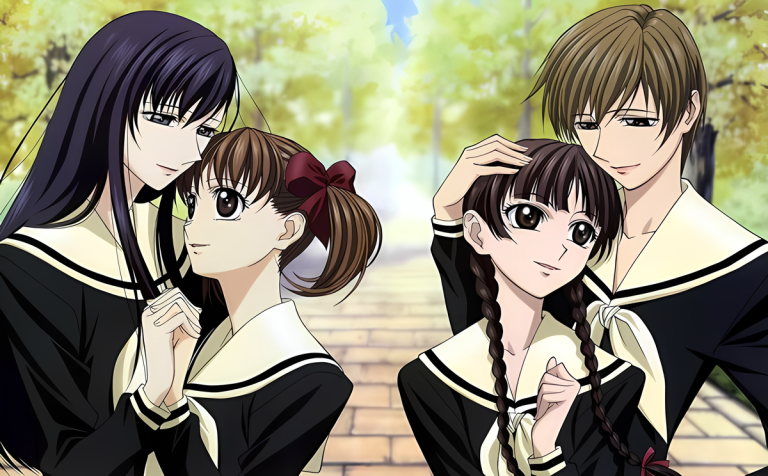
    9. Maria Watches Over Us

    An older classic that defined the Class S yuri subgenre, Maria Watches Over Us is an underrated series that younger fans often act as if it doesn’t exist. Set in an all-girls Catholic school, the story follows the “soeur” system where older students guide younger ones in intimate mentor relationships that blur romantic and platonic lines. The slow-burn tension between Yumi and Sachiko spans multiple seasons as they deal with their feelings neither can quite name within the school’s traditional structure.

    To this day, the anime remains historically important thanks to how it portrayed female relationships with depth and nuance during an era when most yuri was either subtext or explicit content with no middle ground. Modern audiences find the pace too slow and the lack of explicit romance frustrating, but that restraint creates an aching tension that makes every hand touch and meaningful glance hit harder than any kiss scene could.

    10. I’m in Love with the Villainess

    I’m in Love with the Villainess flips the usual otome game story on its head. You follow Rae Taylor, a regular office worker who’s reincarnated into her favorite game, Revolution, and instead of chasing the guys, she sets her sights on the villainess, Claire François.

    Loved for its cute yuri romance, fun characters, and playful poke at typical game tropes, it’s remained a hidden gem for most viewers. That said, anyone who’s into yuri stories, quirky romance, and self-aware comedy will probably adore it.

  • My opinion on Yaoi and Yuri

    My opinion on Yaoi and Yuri

    If you mention Yaoi and Yuri in the real world today, you might get some questionable glances and unfavorable looks. Even among hardcore anime fans, people still with turn up their nose at the very mention of them.

    But what are they? Why do people not like them so much?

    Yaoi is a manga or anime where the emotional or sexual relationship between two or more male characters accounts for most of the plot. Yuri is the same thing except between females. In today’s culture, you can see where this might raise a few red flags for people. While more and more people are becoming open and accepting of people who are more than just the Hetero male and female, it’s still considered taboo.

    I realize that I might get a lot of flak for this article. But that’s one of the reasons I’m writing it. But in part, that’s WHY I’m writing this. So I can spread awareness in the anime community. Also, it’s my blog. If you don’t like it, go read something else.

    The problem with Yaoi and Yuri is the same as with any other kind of mature content: It doesn’t portray real people in a real relationship but oversexed caricatures and stereotypes. If you can deal with that, there’s really no other problem. The real issues only come when people start to believe that this is really how gay relationships work.

    You can say the same thing for TV and movies showing a hetero-sexual relationship. People start to wonder and think on why their life isn’t like that.

    There’s nothing wrong with Yaoi or Yuri. But the writing tends to be at the same level as the Twilight books. Terrible, in other words.

    There is nothing wrong with two men or women being in love. There is something wrong with bad storytelling being the norm.

    There have been only a few Yaoi and Yuri anime shows that I actually liked. Bloom into You was recommended by a friend of mine and the storytelling was well done. Some anime fans joke about how the fact that an anime is more gay by how many exclamation points the anime title has to it. Though I can say that Yuri on Ice!!! is EXTREMELY well done and still one of my top favorite anime shows. The creator even said it was up to the viewer to say if Yuri and Victor were a couple. She made a world where love is love.

    And that’s how it should be.


    Having been part of the anime community, I’ve known all sorts of people with a wide varying field of interests between them when it comes to their own particular vices and pleasures.
    If people enjoy it and they’re not insistent on ramming it down your throat then leave them to it.

    I think the only thing I have a problem with is the age difference. A few years, heck even 5 or 6 years is fine. But a 20 year old dating a 50 year old? That’s something I won’t ever understand. But as for male and male or female and female? Leave them alone and heck, maybe even try to get to know them. You might just gain a new friend.

    What are your thoughts? Let me know in the comments below!

    As always,

    Keep Smiling!

  • Homosexuality and LGBT Relationships in Anime: Yuri!!! on Ice

    Homosexuality and LGBT Relationships in Anime: Yuri!!! on Ice

    If you haven’t already watched Yuri on ICE, you seriously need to take one night to do so. Just these few episodes will be giving you all of the feels and you’ll fall in love with such vivid and well-developed characters.

    So when we were given this month’s prompt for OWLS, I automatically knew what anime I wanted to do…

    This month’s OWLS prompt goes as follows…

    In honor of “Pride Month,” we will be discussing the word, “Pride” and its meaning. We will be exploring pop culture characters’ most satisfying and joyful achievements or skills that they possessed and whether or not these qualities could be seen as a positive or negative aspect in their personal lives and/or society.

    Recently, after reading a fanfiction that had the characters dared to not have feelings by the 11th episode of Yuri!!! on Ice, I decided to give it a try. I hadn’t seen it before but was determined to NOT have felt.

    And…I failed.

    I LOVED it! The characters, the plot, the music…everything. Most interesting to me though, and the reason I wrote this post, was after sharing that I had watched, I received backlash from a few people for watching something openly yaoi.

    I would like to start by saying that I don’t care what orientation a person is. A person’s race, gender, preference, or even eating habits make no big deal to me. If you’re nice to me, I’ll be nice to you. How I react to an LGBT relationship is exactly how I react to a heterosexual one. I’m Asexual, which resulted in my divorce, so maybe that’s why, but it really irritates me when people become so bigoted and just downright cruel to people who oppose different ideas and feelings from themselves.

    Yuri!!! on ICE broke new ground with a kiss between two adult queer men. In the latter, there is an apparent engagement, although both romantic instances were protected from potential outrage by suggestion. They are given their happy ending without being doomed to suffer for it, but at the same time, we never see Yuri or Viktor’s lips meet. At the crucial moment, their mouths are hidden by Viktor’s arm in what could be just an enthused embrace.

    Yuro in ICE!!!

    Homosexuality in the United States

    PRINCETON, NJ/Gallup(SOURCE) – Americans’ support for the moral acceptability of gay and lesbian relations has risen.  Gallup finds greater movement toward acceptance among independents and Democrats than among Republicans, and a big jump in acceptance among moderates. Liberals were already widely accepting of gay relations in 2006, and have remained that way, while conservatives’ acceptance continues to run low.

    I’m always surprised, since most of the friends I know, support, and love all of my LGBT friends. It’s mostly the older generations that seem to have more of an “old fashion” issue with it.

    victor-and-yuri-hugging

    YURI AND VIKTOR’S RELATIONSHIP  

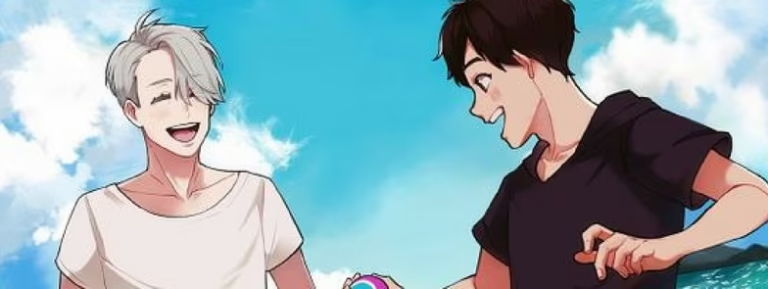
    The internet could argue all day whether or not Yuri and Viktor are canon.  When Phicit announces that Viktor and Yuri are engaged/married at a crowded restaurant, there isn’t one negative comment about the fact they are both men. On the contrary, it seems to be accepted and celebrated.

    However, in real life, as I stated before, people are not so accepting.  Of course, others will argue that they were just “good luck” rings and had no romantic intentions whatsoever.

    image

    See the photo above for my rebuttal regarding THAT.

    Another thing that could be lost in translation is that it was a tradition in Japanese cultures to ask their partner to take care of them…which Yuri did exactly.

    So really,  if you look at the Japanese dialogue closely, Yuri really was asking Victor to be his coach… in the most romantic way possible.

    Maybe people can start seeing the deeper meaning in LGBT relationships, and start considering them as authentic.  We could use a little kindness and acceptance instead. We can take PRIDE in who we are as people, no matter what, and make the world a little better and more accepting.

    And Yuri On Ice!!! maybe just one of the animes to help do that. After all, we were born to make history…

    As always, Keep Smiling!

    P.S. If you missed the previous OWLS post from Dylan (DynamicDylan), click his link there. Marina is up next for tomorrow, so click  Marina (Anime B&B) here for her awesome post!