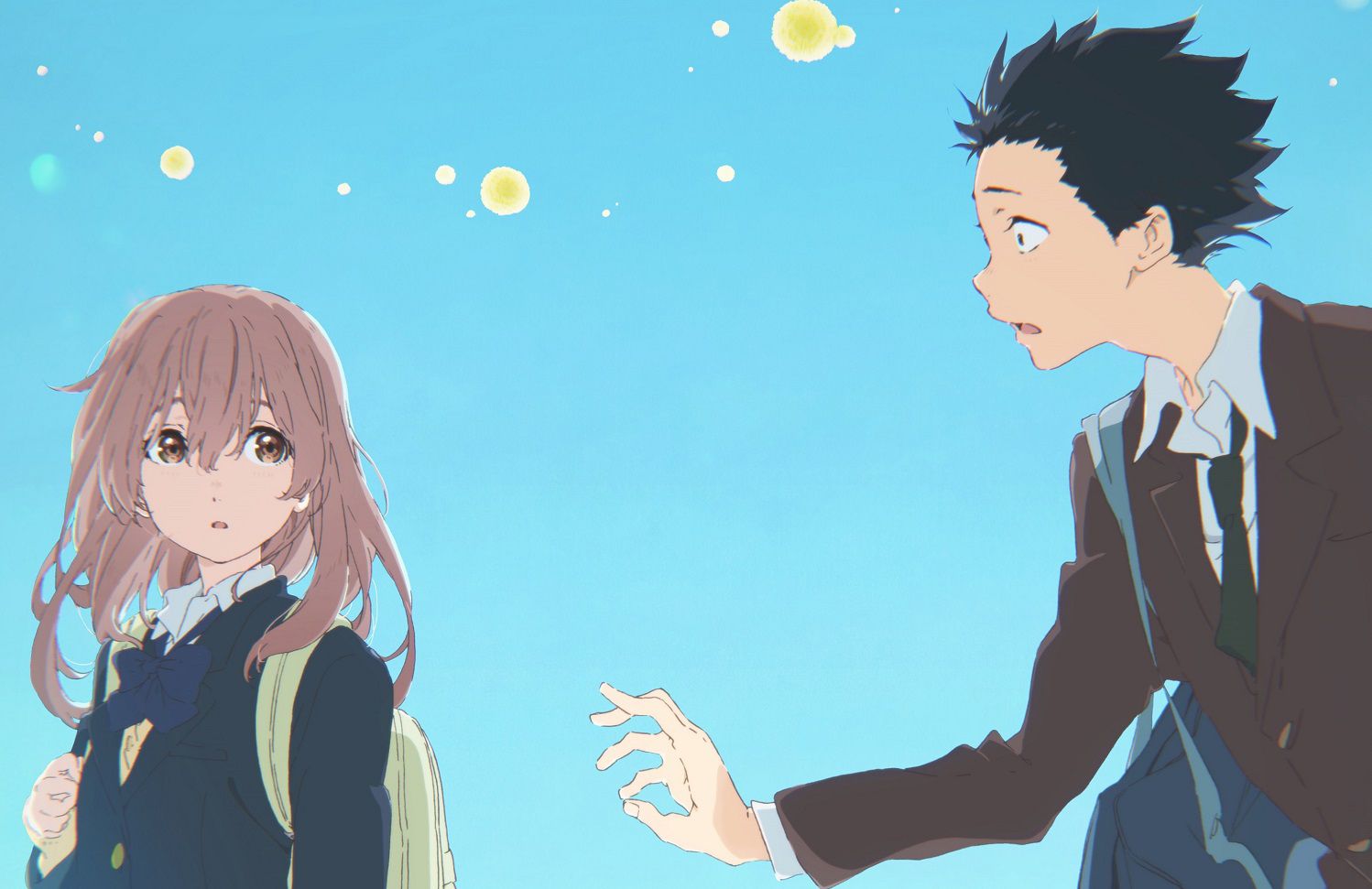
Anime movies have had an absolutely insane run this century. From gut-wrenching tearjerkers to mind-bending adventures, Japanese animation has been quietly (and sometimes loudly) producing some of the greatest films on the planet — and a lot of people are finally starting to notice.
Whether it’s a Makoto Shinkai film crashing box office records or a Studio Ghibli classic getting a long-overdue sequel, anime movies keep proving they belong in the same conversation as any Hollywood blockbuster. The storytelling is bolder, the animation pushes limits that live-action can’t touch, and the emotional punches are unforgettable.
This list breaks down the 15 best standalone anime movies released since 2000, covering everything from critically acclaimed masterpieces to fan-favorite hits. No prior anime knowledge needed to jump into any of them.
1. A Silent Voice

Kyoto Animation, the studio behind some of the most gorgeous animation ever put to screen, absolutely outdid themselves with this one. Based on Yoshitoki Oima’s manga and directed by Naoko Yamada, A Silent Voice follows Shoya Ishida, a kid who spent his elementary school years ruthlessly bullying Shoko, a deaf classmate. When his friends turn on him, and he ends up the outcast instead, years of guilt slowly eat him alive. As a teenager, he tracks Shoko down, not really knowing what he even wants to say to her.
The film tackles bullying, disability, mental health, and redemption without ever feeling preachy. It grossed over $30 million worldwide and holds a 95% on Rotten Tomatoes. Even Makoto Shinkai, director of Your Name, called it a work he could not replicate himself.
2. Your Name.

A boy in Tokyo and a girl in a rural mountain town start waking up in each other’s bodies, with zero explanation and zero warning. They leave notes, set rules, and slowly start to care about a person they’ve never actually met. Then the film pulls the rug out from under you completely, and everything you thought you understood gets flipped on its head.
Directed by Makoto Shinkai and produced by CoMix Wave Films, Your Name. grossed over $400 million worldwide, briefly dethroning Spirited Away as the highest-grossing Japanese film of all time. The soundtrack by the rock band Radwimps became a cultural moment on its own. This is the movie that introduced millions of people worldwide to anime movies as a serious art form, not just cartoons. Genuinely hard to watch just once.
3. Spirited Away
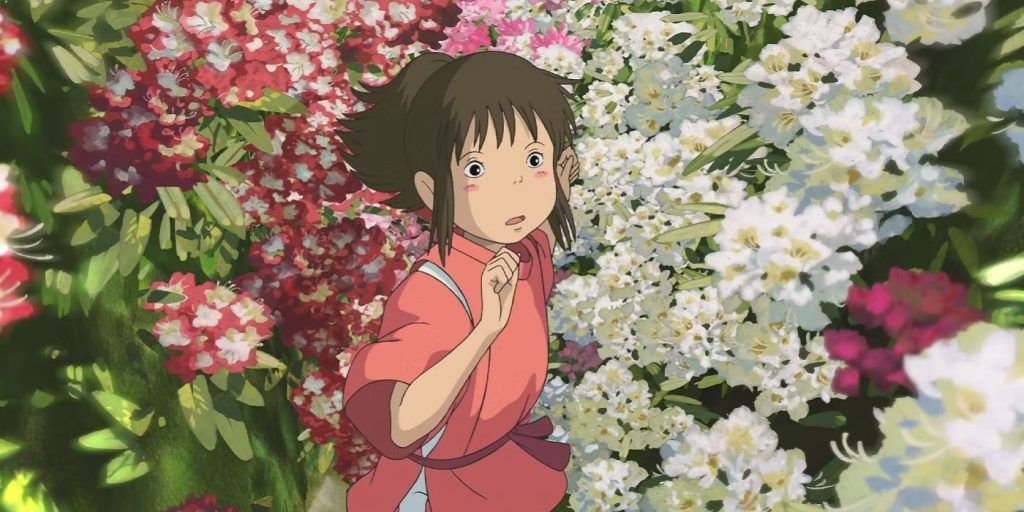
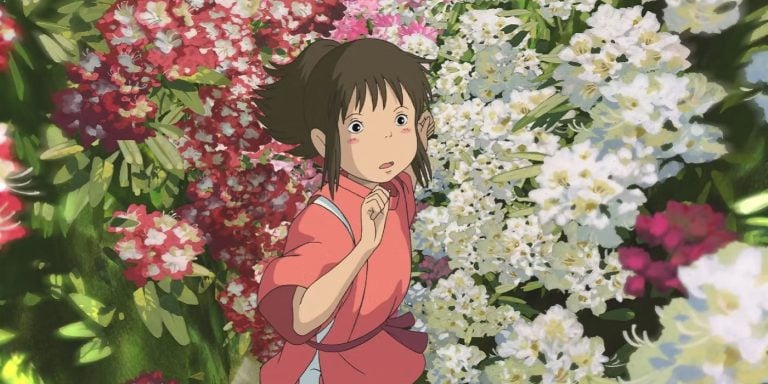
No film on this list has a trophy cabinet quite like this one. Hayao Miyazaki’s Studio Ghibli masterpiece won the Academy Award for Best Animated Feature in 2003, making it the first hand-drawn non-English film to ever take home that Oscar. It also won the Golden Bear at the Berlin International Film Festival and held the record as Japan’s highest-grossing film for nearly 20 years.
The story follows 10-year-old Chihiro, whose parents get turned into pigs after eating cursed food at an abandoned spirit town. Trapped and terrified, she has to find work at a supernatural bathhouse just to survive. It sounds wild, and it absolutely is. But underneath all the bizarre imagery sits a deeply human story about courage and growing up. Billie Eilish even named a 2024 song after the main character, which just shows how lasting this film’s cultural footprint is.
4. Howl’s Moving Castle

Hayao Miyazaki made this film fuelled by genuine anger at the United States’ invasion of Iraq in 2003. That rage is baked into every war scene, every bombed city, every moment where characters refuse to keep fighting. It’s one of the most quietly political Studio Ghibli films ever made, disguised as a fairy tale.
Based on Diana Wynne Jones’ 1986 British novel, the story follows Sophie, a shy hat-maker who gets cursed into the body of a 90-year-old woman and ends up living inside a magical walking castle owned by the vain but complicated wizard Howl. The film grossed $236 million worldwide and earned an Oscar nomination for Best Animated Feature. In fact, Joe Hisaishi’s score alone is worth the watch. Fans of fantasy, romance, and stunning hand-drawn animation will not be disappointed.
5. Look Back
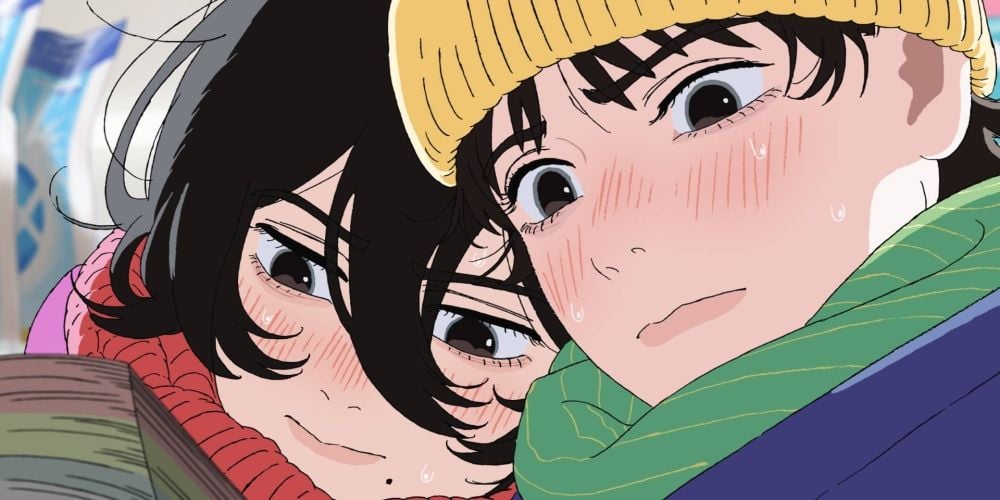
Fifty-eight minutes. That’s all it takes for this film to completely wreck you. Based on Tatsuki Fujimoto’s acclaimed one-shot manga, the Chainsaw Man creator’s most personal work follows Fujino, a popular elementary schooler who draws comics for her school paper, and Kyomoto, a reclusive classmate whose artwork is quietly better than anything Fujino has ever made. What starts as rivalry slowly becomes one of the most moving friendships in recent anime history.
Directed by Kiyotaka Oshiyama in his feature debut and produced by Studio Durian, the film premiered at the Annecy International Animation Film Festival in 2024 and grossed over 2 billion yen in Japan despite a limited release. Moreover, it holds a staggering 98% audience score on Rotten Tomatoes. If you’ve ever cared about making something, anything, this film will hit differently than almost anything else on this list.
6. Wolf Children

Most fantasy films use their supernatural premise as the main event. However, Wolf Children does something much smarter. It uses it as a backdrop for one of the most honest portrayals of single motherhood ever put to screen. Hana, a college student, falls for a man who turns out to be a werewolf. They build a life together, have two half-wolf children, and then he dies suddenly, leaving her to raise Yuki and Ame completely alone, hiding their true nature from the world.
Mamoru Hosoda wrote and directed the film, founding Studio Chizu specifically to produce it. Character design came from Yoshiyuki Sadamoto, the artist behind Neon Genesis Evangelion. The film grossed 4.2 billion yen in Japan, beating Pixar’s Brave at the box office during its opening weekend, and holds a 95% critrics score on Rotten Tomatoes. The film also won the Japan Academy Prize for Animation of the Year. Needless to say, anyone who has a parent, or is one, should watch this.
7. I Want To Eat Your Pancreas
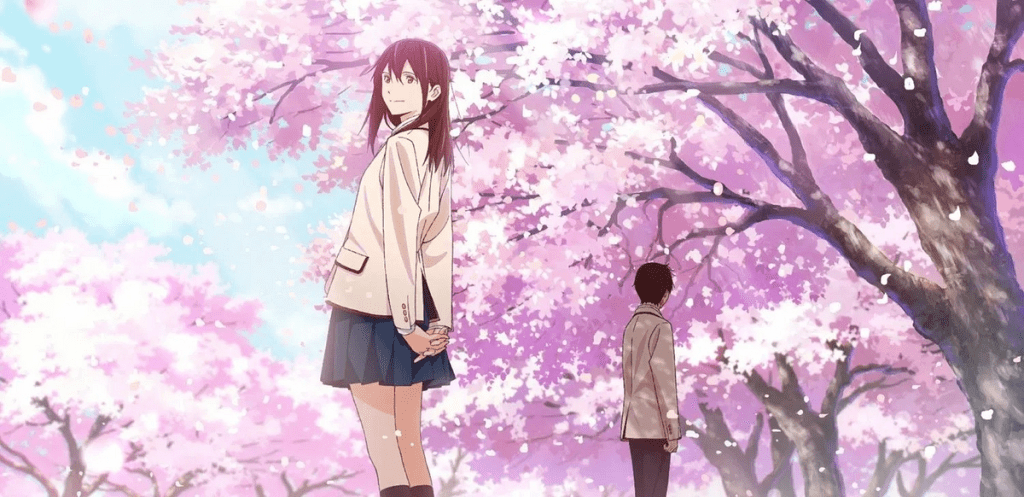
That title is not a mistake. It actually comes from an old Japanese folk belief that eating a diseased organ could heal it, and once you understand that, the whole film hits differently. A quiet, introverted high schooler accidentally discovers his classmate Sakura’s diary, learning she has a terminal pancreatic illness she’s hidden from everyone else. Instead of treating him with pity or panic, she drags him into living with her for whatever time she has left.
Based on Yoru Sumino’s light novel, which sold over 2.7 million copies in print, the film was produced by Studio VOLN and distributed by Aniplex. Director Shinichiro Ushijima handles the material with real restraint, letting the relationship between two completely opposite personalities carry the weight rather than leaning on melodrama. The film grossed over $33.7 million worldwide and placed second in the Anime Trending Awards 2019 for Anime Movie of the Year. Bring tissues. Seriously.
8. Blue Giant
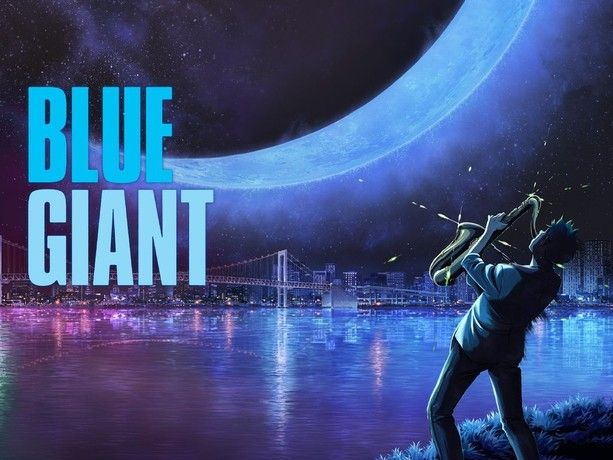
While one might assume that loving jazz is a prerequisite for this film, that’s not really how it works. Blue Giant is ultimately about obsession, the kind that makes someone leave their hometown, sleep on a friend’s floor, and practice until their fingers bleed, and that feeling is completely universal. Dai Miyamoto Dai is a self-taught saxophone player who moves to Tokyo with zero connections, links up with a classically trained pianist and a drummer who barely knows how to play, and together they try to crack one of the hardest music scenes in the world.
Hiromi Uehara performed the piano parts for the soundtrack, and her recordings were used to bring the film’s fictional pianist to life with striking authenticity. As a matter of fact, real professional musicians were brought in to perform instruments heard on screen, with many jazz and classical players involved. The result is concert sequences so viscerally alive that Japanese jazz clubs reportedly saw a spike in customers after screenings. The manga it’s based on has over 11 million copies in print, and it’s not hard to see why once the music kicks in.
9. Maquia: When the Promised Flower Blooms
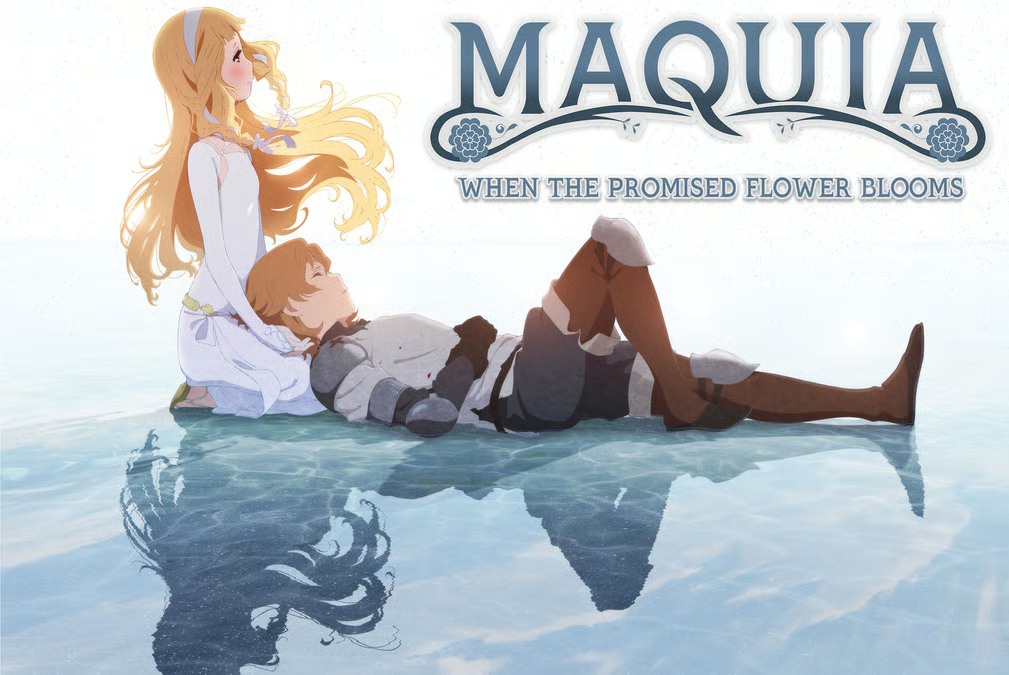
Mari Okada is one of the most respected screenwriters in anime history, with credits on Anohana and The Anthem of the Heart. This was her directorial debut, and she came out swinging with one of the most emotionally gut-wrenching stories on this entire list. Maquia belongs to the Iorph, an immortal race that stops aging in their teens. After her homeland is destroyed in a military raid, she stumbles upon an orphaned newborn in the wreckage and decides to raise him as her own son, despite knowing she will never age while he grows old and eventually dies.
That central tension, watching a mother stay frozen in time while her child lives an entire human life in front of her, is what separates this film from every other fantasy drama in anime. P.A. Works handled the animation, and it is gorgeous throughout. Critics gave it a 100% on Rotten Tomatoes, and it took home awards at the Shanghai International Film Festival and Bucheon International Fantastic Film Festival. Underseen and underrated, this one deserves way more attention than it gets.
10. Josee, the Tiger and the Fish
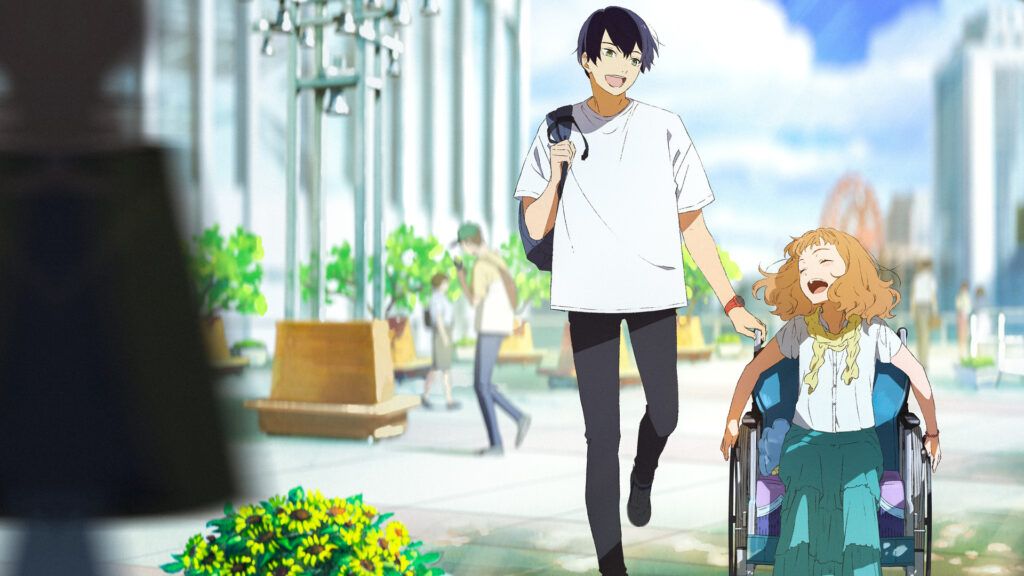
Released in Japanese cinemas on Christmas Day 2020, right as theaters were barely getting back on their feet after pandemic closures, this quiet romantic drama somehow found its audience anyway. Tsuneo is a university student with dreams of diving overseas who ends up as caretaker for Josee, a sharp-tongued, wheelchair-bound woman who has spent most of her life locked inside her grandmother’s house, filling notebooks with drawings of a world she’s never been able to reach.
Studio Bones, the team behind Fullmetal Alchemist: Brotherhood and My Hero Academia, handled animation duties here and brought a looser, sketchier visual style that fits the story’s intimacy perfectly. The underwater sequences in particular are genuinely stunning. What director Kotaro Tamura got right in his feature debut is that Josee never becomes a symbol or a lesson. She’s funny, difficult, and fully human, which is rarer than it should be in stories built around disability.
11. 100 Meters
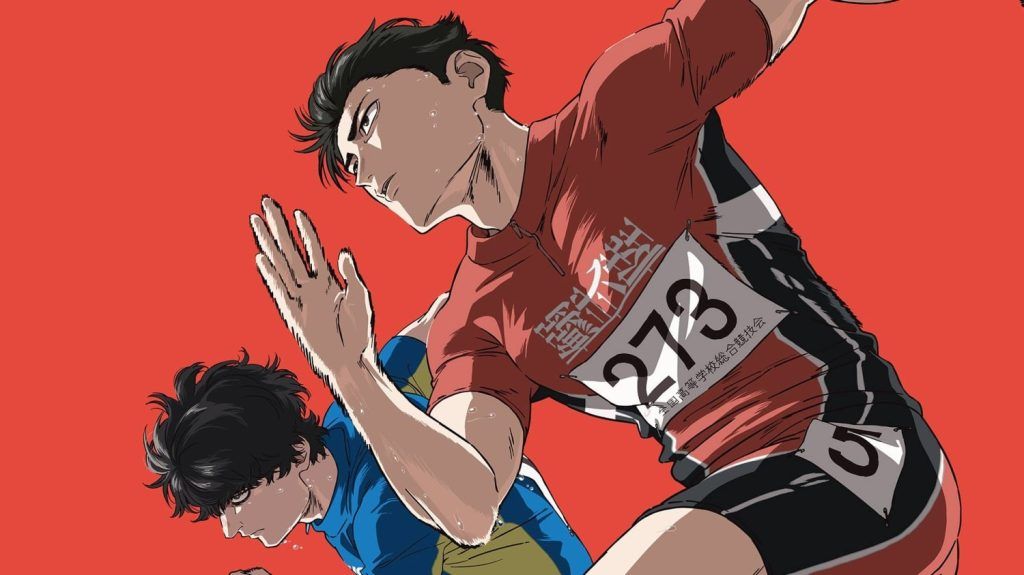
Togashi is the kind of kid who wins every race without trying. Then Komiya shows up, a transfer student with zero natural talent but an obsession so intense it borders on unsettling. Togashi teaches him how to run, and in doing so, creates the rival who will define his entire athletic life. The story spans over 15 years of that rivalry, using the 100-meter dash as a way to ask much bigger questions about identity and purpose.
Studio Rock ‘n’ Roll Mountain used rotoscoping throughout, tracing over live-action footage to capture the physical reality of sprinting in a way most sports anime don’t even attempt. Critics compared it to Ping Pong the Animation and Redline for sheer kinetic confidence. Interestingly, while it has been nominated for multiple awards, it hasn’t managed to snatch any wins.
12. The Legend of Hei
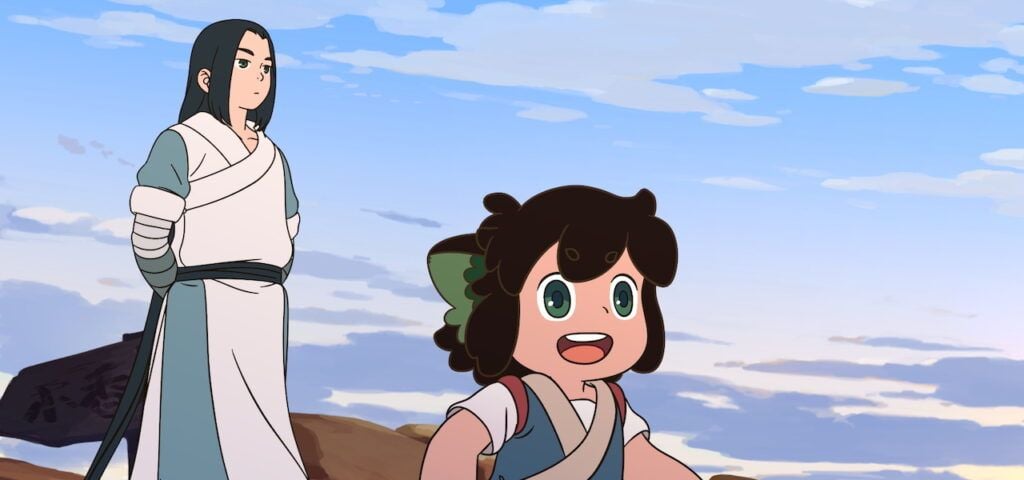
Director MTJJ spent years creating The Legend of Luo Xiaohei as a scrappy Flash web series starting in 2011, with a very limited team and modest resources. This film is a prequel to that series, following Xiaohei, a cat spirit who gets displaced when humans destroy his forest and ends up reluctantly kidnapped by a powerful human named Infinity while trying to find a new home. What unfolds is genuinely morally complicated in a way that a lot of animated films avoid.
The Legend of Hei earned around $48 million internationally, set a box office record for Chinese animated films released in Japan, and was praised by veteran Japanese animators who admitted Chinese animation was catching up fast. The Ghibli comparisons started flying immediately, and it’s not hard to see why. If you think anime as a medium is limited to Japan, this film will change your mind quickly.
13. Redline

Seven years. That’s how long Madhouse spent making this film. Over 100,000 hand-drawn frames, a $18.5 million budget, and a Japanese box office return of roughly $8 million. By any financial measure, it was a disaster. By every other measure, it’s one of the most jaw-dropping pieces of animation ever committed to screen.
Sweet JP is a reckless rockabilly racer who fixes races for the mob but gets drafted by popular demand into Redline, the galaxy’s most dangerous illegal race held every five years at a secret location, this time on a planet run by militant cyborgs who have threatened to destroy anyone who shows up. The plot is deliberately thin because the point was never the story.
Director Takeshi Koike’s debut feature is a pure celebration of what hand-drawn animation can do when nobody is thinking about money. It flopped theatrically, built a cult following on home release, and has been cited as an influence by animators worldwide ever since.
14. Tokyo Godfathers
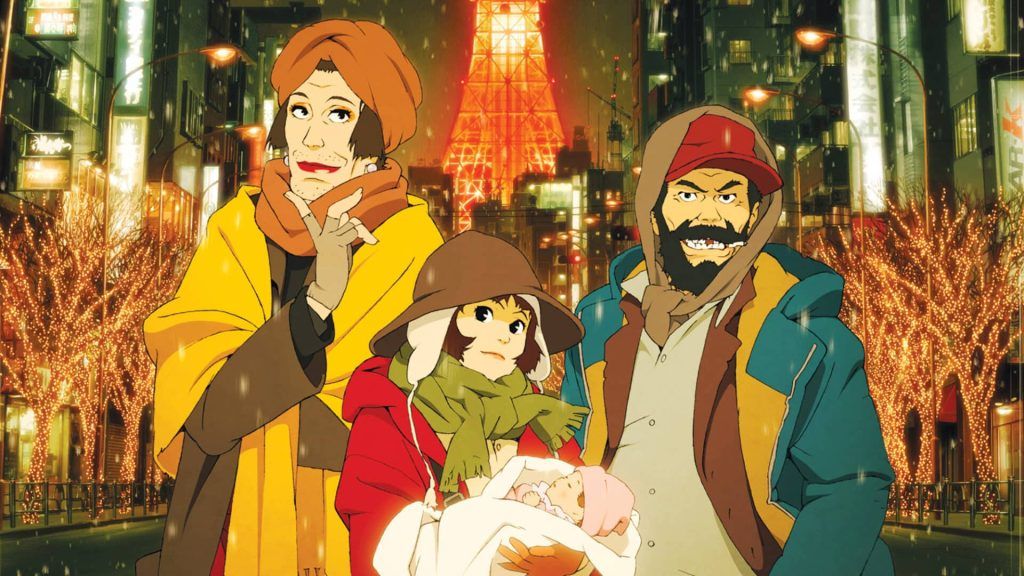
Christmas Eve in Tokyo, and three homeless people are digging through garbage when they find an abandoned newborn baby. The trio couldn’t be more mismatched: Gin is a middle-aged alcoholic with a gambling past he’d rather forget, Miyuki is a sullen teenage runaway who hasn’t spoken to her father in years, and Hana is a former drag queen who desperately wanted a child of her own. Despite having nothing, they decide to track down the baby’s parents, setting off a chaotic overnight chase across a freezing city where coincidences pile up so fast they start to feel like something more.
Satoshi Kon, the director behind Perfect Blue and Millennium Actress, made this as a deliberate departure from his signature psychological surrealism; the film draws influence from 3 Godfathers while reshaping it into something uniquely his own. Produced by Madhouse and co-written by Cowboy Bebop screenwriter Keiko Nobumoto, the film won Best Animation at the 58th Mainichi Film Awards and holds a 92% on Rotten Tomatoes. Interestingly, it even got a 4K restoration in 2023 for its 20th anniversary. The best Christmas anime film ever made, and it isn’t particularly close.
15. Millennium Actress

A documentary filmmaker tracks down Chiyoko Fujiwara, a legendary Japanese actress who vanished from public life at the peak of her career thirty years ago. When he hands her a mysterious key from her past, she begins telling the story of her life, and from that point, the film does something genuinely unlike anything else on this list. As Chiyoko narrates, her memories bleed directly into the films she starred in over the decades, so the interviewer and his cameraman find themselves tumbling through feudal Japan, World War II, and a futuristic space age, chasing a woman they can never quite reach.
Satoshi Kon’s second feature, produced by Madhouse, is loosely inspired by the lives of real Japanese actresses Setsuko Hara and Hideko Takamine. The film won the Orient Express Award at the Sitges Film Festival, alongside recognition at Fantasia, further reinforcing its status as one of Satoshi Kon’s most acclaimed works.