Not every great anime needs 50 episodes and three movies to tell its story. Some of the best ones wrap everything up in a single season, give you a real ending, and leave you feeling like you watched something genuinely worth your time.
The problem is that most of them never blow up the way they deserve to. They air quietly, get buried under bigger releases, and disappear from the conversation before enough people even notice they exist.
That’s what this list is for. Every anime here runs between 10 and 13 episodes, wraps up properly with no “go read the manga” cop-outs, and covers a wide enough range of genres that there’s something regardless of what you’re in the mood for.
1. Odd Taxi
- Episodes: 13
- Genres: Mystery, crime, slice of life, thriller
- Aired: 2021
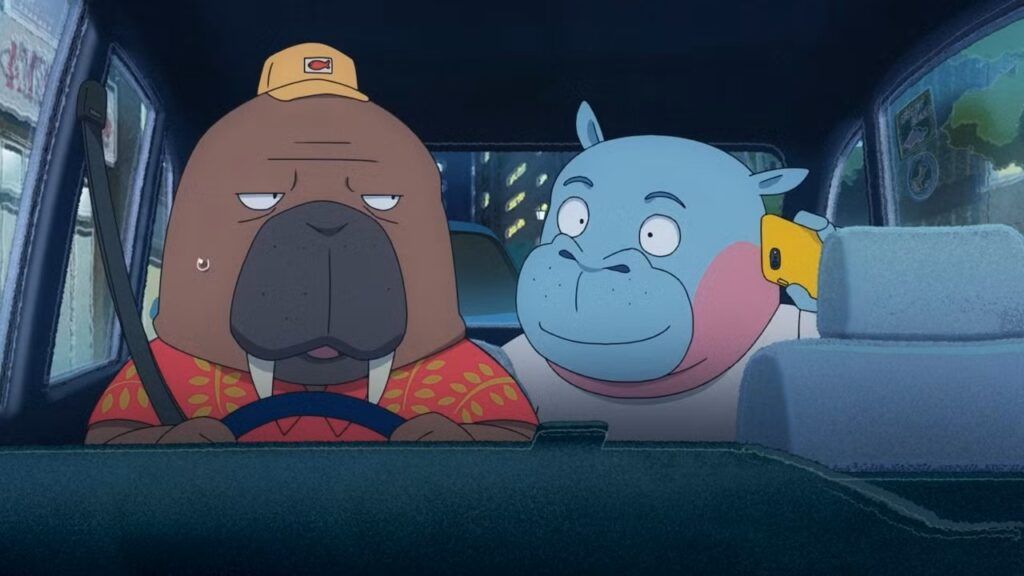
A 41-year-old walrus drives a taxi through Tokyo, picking up passengers and having conversations so mundane they barely register at first. A college student chasing social media fame. A nurse hiding something. A struggling comedy duo. An idol group on the rise. None of it seems connected, and then slowly, episode by episode, it very much does. A missing schoolgirl sits somewhere at the centre of all of it, and Odokawa, who barely talks to anyone by choice, somehow keeps ending up in the middle of everything.
Co-produced by OLM and P.I.C.S., Odd Taxi won Best Anime of 2021 from IGN, got an honorable mention on The New Yorker’s best TV of 2021 list, and won the New Face Award at Japan’s prestigious Media Arts Festival in 2022. The IMDb score sits at 8.3, and fans poured into the comments comparing it to Tarantino films specifically because of how the seemingly unconnected storylines all snap together by the finale. Not bad for a 13-episode original from a studio most people had never heard of before it aired. If you only watch one thing on this list, make it this one.
2. 91 Days

- Episodes: 12
- Genres: Crime, drama, revenge, historical
- Aired: 2016
Prohibition-era America is not exactly the setting you’d expect from a Japanese anime, but that’s part of what makes this one so refreshing. Angelo Lagusa watched the Vanetti mafia family murder his parents and younger brother when he was a child. Seven years later, an anonymous letter arrives pointing him toward the men responsible, and Angelo returns to the town of Lawless under a fake identity, slowly working his way inside the very family that destroyed his. The plan is to get close to Nero Vanetti, earn his trust, and then dismantle everything from the inside over the course of 91 days.
Produced by Studio Shuka and directed by Hiro Kaburagi, the 12-episode series was written by Taku Kishimoto, the same writer behind Haikyuu and Erased. What separates it from typical revenge stories is that nobody in this show has clean hands, including Angelo. The closer he gets to Nero, the messier everything becomes, and while the story does conclude, it leans into a bleak, morally uncomfortable ending rather than a clean resolution. The opening theme by TK from Ling Tosite Sigure sets the tone perfectly from episode one. Fans of Baccano or old-school gangster films will feel right at home.
3. Tsuki ga Kirei
- Episodes: 12
- Genres: Romance, slice of life, coming-of-age
- Aired: 2017
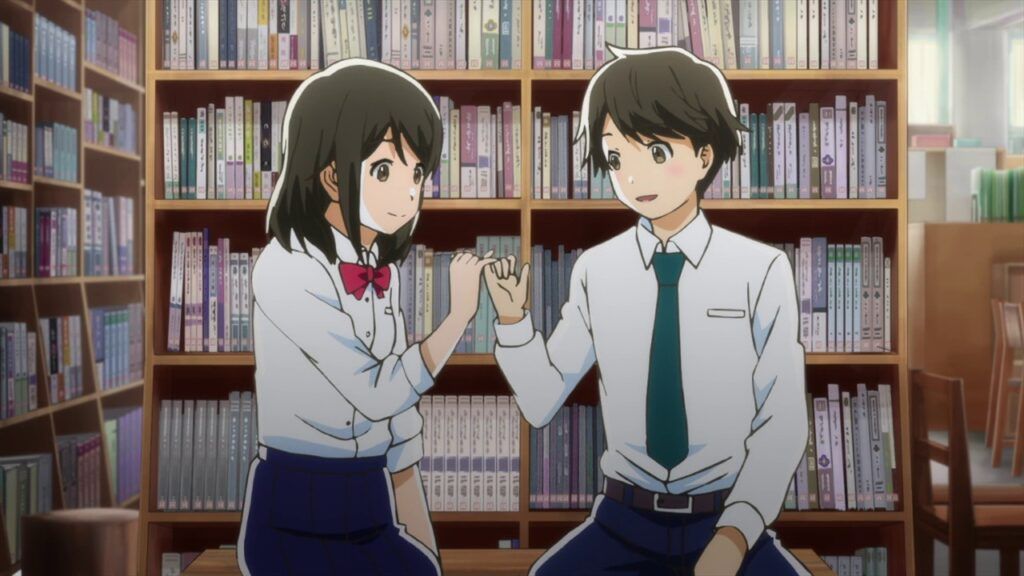
Most romance anime manufacture drama. Someone overhears something out of context, a misunderstanding spirals for three episodes, and feelings get buried under comedic misfortune. Tsuki ga Kirei doesn’t do any of that. Kotaro likes Akane. Akane likes Kotaro. They’re both terrified to say it, and watching two genuinely shy teenagers fumble through that feeling in real time, texting each other at night because talking in person is too much, is somehow more gripping than any manufactured obstacle could ever be.
Interestingly, the show uses on-screen LINE-style messages in the ending sequences as a core narrative tool. They’re not just decoration, but basically how their relationship “develops off-screen” without needing extra scenes. Episode 12 doesn’t just tie everything together; it also gives a really nice epilogue showing where these two end up years later, which is refreshing in a genre where a lot of romances just keep teasing things and never really let them settle.
4. Mononoke

- Episodes: 12
- Genres: Mystery, horror, supernatural, psychological
- Aired: 2007
First things first: this has nothing to do with Princess Mononoke. Mononoke is a completely different show, and arguably the more interesting one to discover. A nameless man known only as the Medicine Seller wanders through feudal Japan, encountering spirits called Mononoke, supernatural beings born from human emotions like guilt, rage, and grief. Before he can draw his sword to exorcise them, he has to uncover three things: the spirit’s form, its truth, and its reason for existing. Each arc plays out like a ghost story crossed with a murder mystery, with the Medicine Seller pulling confessions and buried secrets out of the people around him.
Nothing in anime looks like this. Toei Animation built every frame around ukiyo-e woodblock print aesthetics, layering rice paper textures over vibrant, almost overwhelming patterns and colors. The Mainichi newspaper said at the time that the show could not be dismissed as mere experimentation and that its themes were every bit as advanced as its visual techniques. The series holds an 8.1 on IMDb and was added to Netflix in 2024, which introduced it to a whole new audience. Since Mononoke is structured in self-contained arcs of two to three episodes each, it’s more than perfect for a weekend watch.
5. After the Rain
Episodes: 12
Genres: Romance, drama, slice of life
Aired: 2018
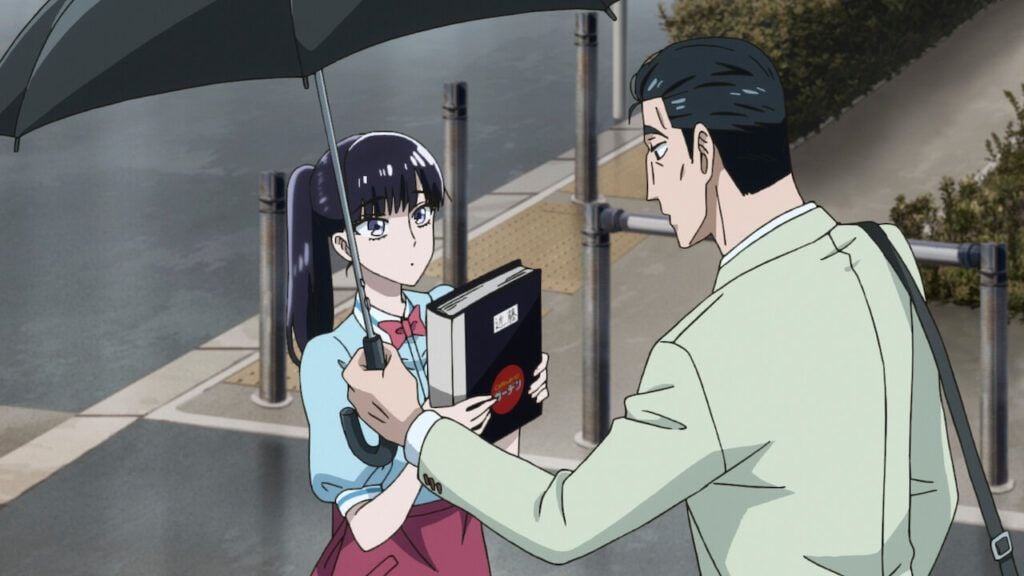
Akira used to run. That’s the thing the show never lets you forget. A leg injury killed her track career mid-season, and now she’s drifting through part-time shifts at a family restaurant, quietly falling for her manager, a 45-year-old divorced dad named Kondo who trips over things and reads literature in the break room. On paper, that sounds like a recipe for something uncomfortable. In practice, the show is less interested in whether they get together and more interested in what happens when two people who both gave up on something they loved finally admit it out loud.
Wit Studio’s direction keeps everything deliberately understated, all rain-soaked windows and tight close-ups that make every small moment feel heavy. Interestingly, the ending theme by Aimer became almost as talked-about as the show itself. 12 episodes, no fluff, and an ending that actually respects both characters enough not to do something cheap with them. After the Rain aired on Fuji TV’s prestigious Noitamina block in early 2018, and it somehow still flies under the radar.
6. Kaiba

- Episodes: 12
- Genres: Sci-fi, psychological, adventure, romance, avant-garde
- Aired: 2008
What if memories could be stored on chips, bought, sold, stolen, and transferred between bodies? In Kaiba’s world, that’s just another Tuesday. A young man wakes up in a ruined room with no idea who he is, a hole in his chest, and a locket containing a photograph of a girl he can’t remember. From there, the show sends him drifting through a galaxy-spanning dystopia where the wealthy basically live forever by jumping between bodies, while everyone else scrambles for scraps.
Masaaki Yuasa, the director behind Devilman Crybaby and The Tatami Galaxy, made this at Madhouse in 2008, and it remains one of the strangest, most undervalued things he’s ever done. The art style is deliberately childlike, borrowing from Osamu Tezuka’s Astro Boy aesthetic, which makes the violence and philosophical weight hit that much harder when they show up. One reviewer on Letterboxd put it perfectly: it sits somewhere between Don Hertzfeldt, Chuck Jones, and a devastating love story.
7. Tsuritama
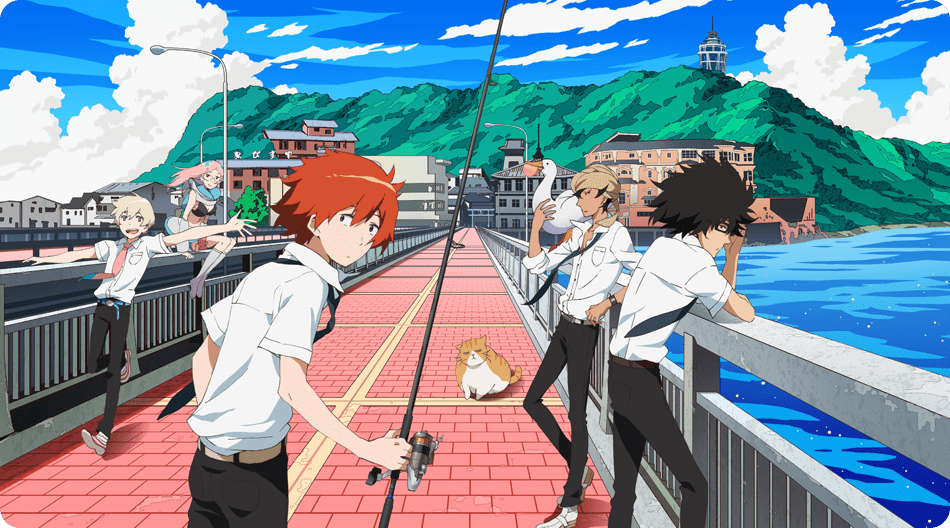
- Episodes: 12
- Genres: Sci-fi, slice of life, comedy, fishing
- Aired: 2012
Yuki has such severe social anxiety that whenever he tries to talk to someone, his face involuntarily twists into an expression so intense that people mistake it for pure rage. Moving schools constantly has made it worse, and by the time the story starts, he’s basically given up on having friends entirely. Then an alien named Haru shows up at his new school, announces they’re best friends now, and immediately starts dragging him to the beach to learn how to fish. The show treats this completely seriously, which is part of why it works so well.
Directed by Kenji Nakamura, who also made Mononoke, and produced by A-1 Pictures on Fuji TV’s Noitamina block, the 12 episodes feel like they’re set permanently in the middle of a warm afternoon, all bright colours and salt air and characters slowly becoming something to each other. Underneath the alien nonsense, there’s a genuinely tender story about a kid who doesn’t know how to exist around other people, finally figuring it out. Not everything on this list needs to leave you wrecked. Sometimes a show just makes you feel good, and Tsuritama does that better than almost anything else in this genre.
8. City The Animation
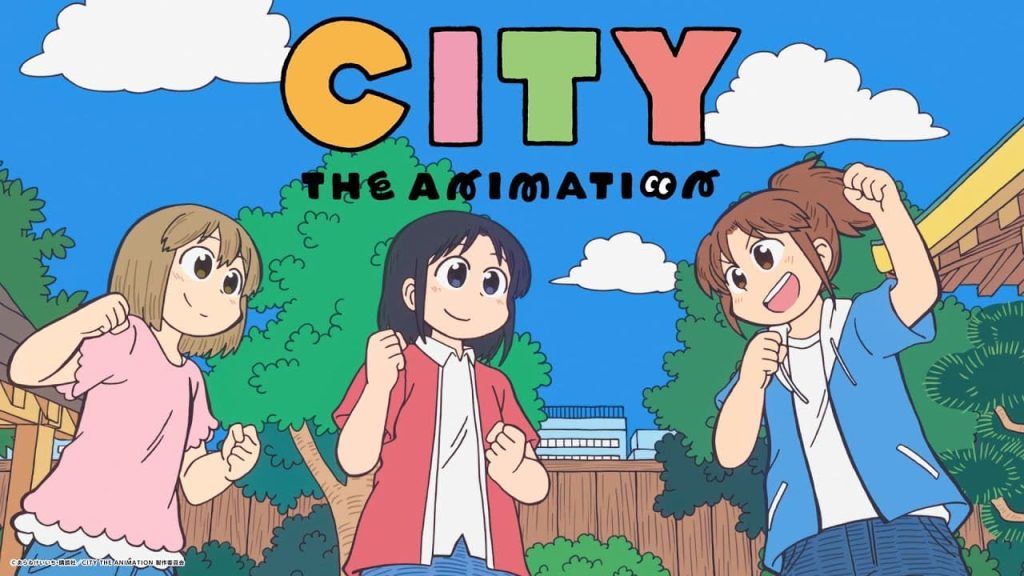
- Episodes: 12
- Genres: Comedy, slice of life, surreal
- Aired: 2025
Six years after the 2019 arson attack that killed 36 of their staff members, Kyoto Animation finally returned with a completely original new project. That context matters because City The Animation feels like a studio rediscovering its own joy. Based on Keiichi Arawi’s manga, the same creator behind the beloved Nichijou, it follows a chaotic cast of college-age residents living in a town simply called City, anchored loosely around three friends whose daily lives spiral into increasingly unhinged situations while the rest of the neighbourhood gets up to its own equally ridiculous business in the background.
Directed by Taichi Ishidate of Violet Evergarden and running for 13 episodes on Amazon Prime, the show is the kind of thing where animators spent enormous effort making a single gust of wind catch a man’s mustache on a train ride correctly, because that’s just how Kyoto Animation operates. Screen Rant called it 2025’s most criminally underrated anime. CBR called it a masterpiece. Both are right. If Nichijou left a Kyoto-shaped hole in your life, this fills it completely.
9. Apocalypse Hotel
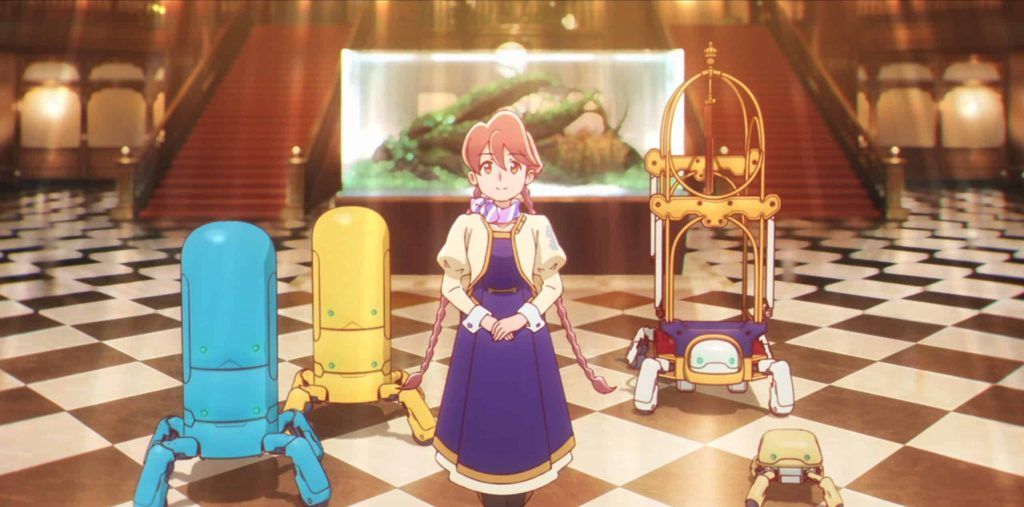
- Episodes: 12
- Genres: Sci-fi, slice of life, post-apocalyptic, drama
- Aired: 2025
Humanity abandoned Earth in 2057 and never came back. A century later, the Gingarou Hotel in Tokyo’s Ginza district is still running, still staffed, and completely empty. Yachiyo, the robot concierge managing the whole operation, keeps the lobby spotless, the rooms ready, and the service standards immaculate, because that’s what she was built for, and she genuinely cannot conceive of doing anything else. It sounds bleak on paper, and the show absolutely lets it be bleak, but it also finds something quietly radical in the idea of a being that finds total meaning in caring for a world that no longer exists.
What’s interesting is that the show never tells you how to feel about any of it. Some episodes are genuinely hilarious, others creep up on you and hit in ways you don’t see coming. Episode 11 is almost completely wordless, just Yachiyo moving through a single day off with no guests, no crisis, nothing to resolve. That episode alone says more about purpose and loneliness than most shows manage across an entire run, and it does it without a single line of dialogue. In fact, that’s where Apocalypse Hotel really lands, because it actually trusts you to figure things out instead of constantly spelling everything out.
10. Ping Pong the Animation
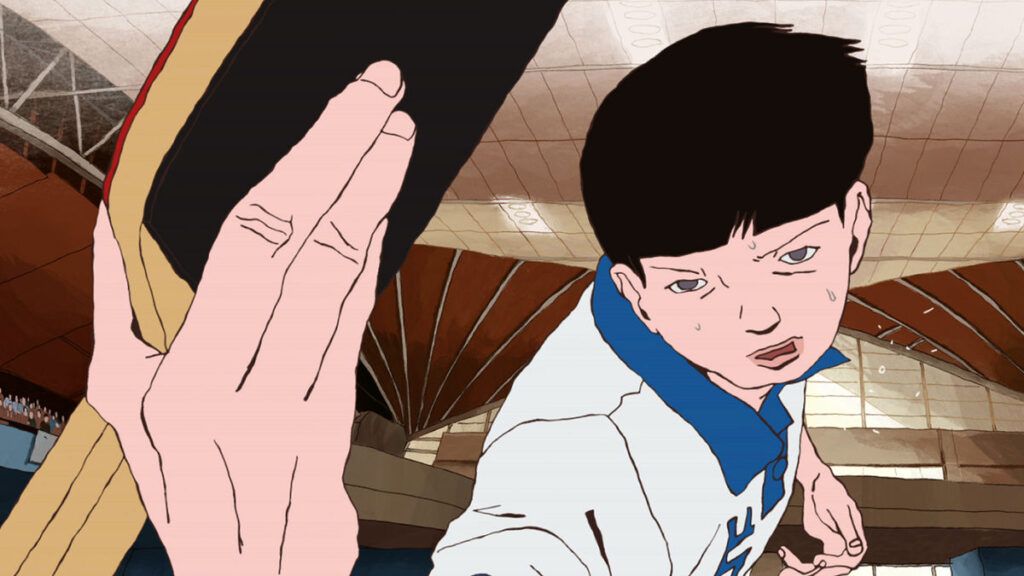
- Episodes: 11
- Genres: Sports, drama, psychological
- Aired: 2014
Ping Pong’s art style is the first thing people complain about, and the reason most of them don’t watch it. Characters look loose and roughly sketched, like someone animated a notebook doodle, and that’s a deliberate choice that most newcomers mistake for a lack of budget. Getting past that takes maybe two episodes, and then the sport stops mattering entirely because what Masaaki Yuasa is actually making here is a story about five completely different people and why they play, what it costs them, and what happens when talent alone isn’t enough to carry you.
Peco and Smile have been friends since childhood and are both genuinely exceptional at table tennis, but in completely opposite ways and for completely opposite reasons. Watching those two trajectories diverge and eventually reconnect across 11 episodes on Fuji TV’s Noitamina block is the whole show. The anime won the Grand Prize at the Tokyo Anime Awards Festival and holds an 8.6 on IMDb. Polygon and IGN both named it one of the best anime of the entire 2010s decade.